
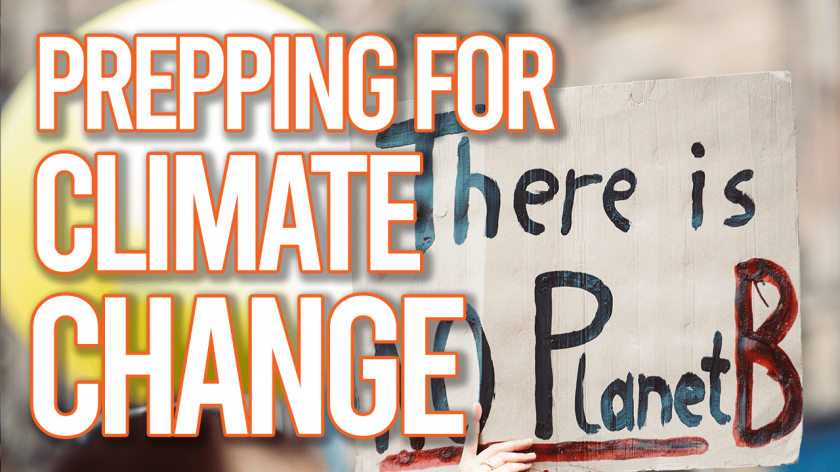
Many survivalists take pride in their ability to face a variety of extreme scenarios, from navigating through a post-apocalyptic world to surviving off the grid in remote wilderness. However, there’s an unprecedented challenge that even the most seasoned survivalists might not be adequately prepared for: climate change. This global phenomenon, often relegated to the realm of scientific and political debates, is now becoming an unseen challenge for survivalists, reshaping the very landscapes we’re accustomed to and introducing new elements of unpredictability into survival strategies.
The Climate Crisis
Climate change, simply put, is the long-term alteration of temperature and typical weather patterns in a place. It’s driven by a range of natural factors; however, human activities—particularly the burning of fossil fuels and deforestation—are major contributors to the rapid changes we’re seeing today.
Evidence of climate change is all around us. Global temperatures are rising, leading to heatwaves and prolonged fire seasons. Polar ice is melting, causing sea levels to rise and coastal flooding to increase. Intense hurricanes, typhoons, and cyclones are becoming more frequent. Regions that once enjoyed consistent rainfall are now experiencing droughts, while others are receiving more rainfall than they can handle, leading to floods and landslides.
Climate Change: The Unseen Challenge
For survivalists, these changes bring a host of unforeseen challenges. Traditionally, survivalism has been predicated on the ability to understand and adapt to the environment. This understanding is based on predictable patterns, long-term observations, and established knowledge about regional climates and landscapes. However, climate change is quickly rendering these established norms obsolete. This unpredictability is the unseen challenge survivalists now face.
Shifting Landscapes
The first impact of climate change is the dramatic alteration of landscapes. Rising temperatures and changing weather patterns are transforming environments, making them unpredictable, and sometimes, uninhabitable.
For instance, consider the northern regions where survivalists might have relied on ice fishing or hunting caribou. As temperatures rise, the ice melts earlier each spring and forms later in the fall, while caribou migration patterns change in response to the shifting climate. These changes can undermine traditional survival techniques and require new strategies.
Unpredictable Weather Patterns
Survivalists are skilled at reading the sky, interpreting the signs of changing weather, and making quick decisions to stay safe. However, climate change has increased the frequency and intensity of severe weather events, from hurricanes and wildfires to floods and droughts, making it more challenging to predict weather patterns accurately.
Changing Wildlife Behavior
Wildlife forms a crucial part of many survivalist strategies, whether it’s hunting for food, avoiding dangerous predators, or simply understanding animal behavior as a signal of changing seasons or impending weather. As climate change alters habitats, many species are migrating to new areas, changing their behavior, or, in the worst cases, facing extinction. This can have a profound impact on the ecosystems survivalists depend on.
Adapting Survivalism for a Changing World
So, how should survivalists respond to this unseen challenge? Here are a few strategies:
Expand Knowledge and Skills
Survivalists must invest time in understanding the science of climate change and its potential impacts on the environments they are familiar with. There’s a need to learn new survival skills tailored to different environments and situations, and unlearn outdated practices that no longer apply to the changing landscapes.
Plan for Unpredictability
Planning for a range of scenarios will become increasingly important. This means not only preparing for the most likely scenarios based on historical weather patterns but also considering the potential for more extreme and less predictable events.
Sustainable Practices
Survivalists should also consider how they can minimize their own impact on the environment.
Practices such as ‘Leave No Trace’ camping, sustainable hunting and fishing, and using renewable energy sources can all help reduce further contributions to climate change.
Final Thoughts
Climate change presents an unseen, complex challenge for survivalists. It requires us to rethink our strategies, learn new skills, and become more adaptable to the rapidly changing environment. Ultimately, survivalism is about resilience, and adapting to climate change is the ultimate test of that resilience. By facing this challenge head-on, survivalists can play a part in understanding, mitigating, and adapting to our changing world.