
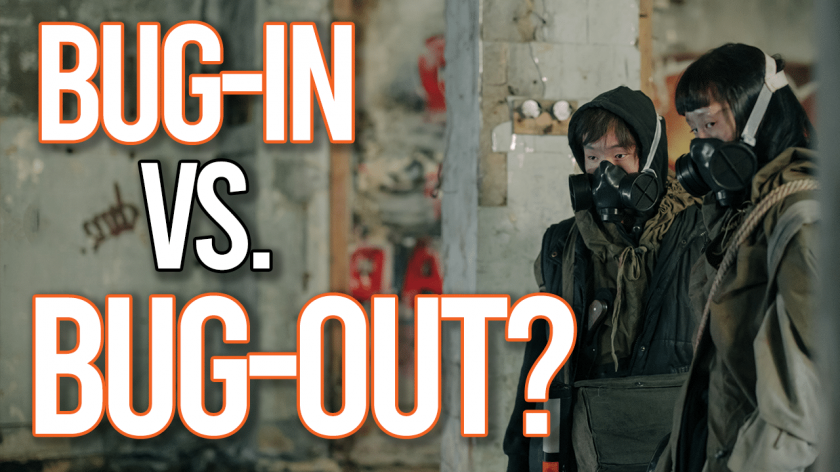
When it comes to emergency preparedness, one of the most fundamental decisions you’ll need to make is whether to bug out or bug in. Both strategies have their pros and cons, and the right choice for you will depend on a range of factors, including your location, resources, and personal circumstances.
In this blog post, we’ll explore the differences between bug-out and bug-in strategies and help you determine which one is best for your situation.
What is Bug-Out? The Nomadic Survivalist
Bug-out refers to the process of leaving your home or current location to escape an impending disaster. This could be a natural disaster like a hurricane, tornado, or wildfire, or a man-made event like civil unrest or a terrorist attack. The goal of bug-out is to get to a safer location, typically a pre-determined bug-out location (BOL), where you can wait out the crisis.
The process of bug-out involves packing a bug-out bag (BOB) with essential supplies and equipment, securing your home, and then hitting the road. You’ll need to have a well-planned route, alternative routes, and contingency plans in case your primary plan is compromised.
What is Bug-In? The Fortress Mentality
Bug-in, on the other hand, refers to the strategy of staying put and hunkering down in your home or current location during an emergency. This approach relies on the assumption that your home is safe and secure and that you have enough supplies and resources to weather the storm.
Bug-in typically involves stockpiling food, water, medical supplies, and other essential items, fortifying your home against potential threats, and developing a plan for dealing with power outages, water shortages, and other common emergency scenarios.
Which Strategy Is Best for You?
There are plenty of considerations when preparing and comparing bug-in and bug-out.
Location
Your location is one of the most critical factors to consider when deciding on a survival strategy. If you live in an area prone to natural disasters like hurricanes, tornadoes, or wildfires, bug-out may be your best option. In these cases, you may not have a choice but to evacuate and seek shelter elsewhere.
If you live in a relatively safe area, bug-in may be a more viable option. However, it’s still essential to prepare for potential emergencies, even if they’re less likely to occur.
Resources
Your available resources will also play a significant role in determining your best survival strategy. If you have a well-stocked bug-out bag, access to a safe bug-out location, and the means to get there, bug-out may be your best option.
If you have limited resources, however, bug-in may be a more realistic choice. You can focus on fortifying your home, stockpiling essential supplies, and developing a plan for dealing with various emergency scenarios.
Personal Circumstances
Your personal circumstances, including your health, mobility, and family situation, will also play a role in determining your best survival strategy. If you have mobility issues or young children, bug-out may be more challenging, and bug-in may be a better choice.
If you have a large family, bug-out may be more complicated, as you’ll need to ensure that everyone can travel safely and that you have enough supplies to sustain everyone during the journey.
Weighing the Options
Deciding between bug-out and bug-in strategies is not a simple task. Both strategies have their merits and are better suited to different scenarios.
For instance, if you live in an urban area that’s densely populated, bugging in may be dangerous during a disaster that sparks mass panic or violence. On the other hand, if you’re in a remote area where help could be days away, bugging out during a severe snowstorm might put you at more risk than staying put.
Therefore, the best approach is a balanced one. Having both a bug-out bag ready and a well-stocked home gives you options, increasing your chances of survival in various scenarios.
Focus on Your Personalized Survival Plan
While it’s crucial to understand and prepare for both strategies, your personal survival plan should also consider your unique circumstances. Evaluate potential risks in your area, consider your physical abilities and health status, and think about your survival skills.
If you’re in peak physical condition, have excellent survival skills, and live in an area prone to large-scale disasters, a bug-out strategy might be more suitable. Conversely, if you have limited mobility, live in a relatively safe area, or have a home well-stocked with resources, a bug-in strategy might be best.
Conclusion
In the end, the debate between bug-out and bug-in is not about determining a one-size-fits-all answer. Instead, it’s about understanding the strengths and weaknesses of each strategy and adapting them to fit your specific situation.
No two disaster scenarios are the same, and as such, your survival strategy should not be rigid. It should be flexible enough to adapt to the changing dynamics of a crisis. For example, you might initially plan to bug-in during a hurricane. But if the situation worsens and your home is severely damaged, you should be ready to switch to your bug-out plan.
This flexibility underscores the need for comprehensive preparation. Ideally, you should be as prepared as possible for both bugging in and bugging out. This means not only having a packed bug-out bag but also ensuring your home is well-stocked with essential supplies. You should also regularly review and update your plans as your situation changes.
Moreover, it’s essential to remember that survival isn’t just about having the right gear or the most supplies. It’s about having the knowledge and skills to use what you have effectively. So, invest time in learning survival skills, like first aid, fire-making, navigation, and foraging. These skills will serve you well, regardless of whether you’re bugging in or bugging out.
Finally, while the debate between bugging in and bugging out is interesting and important, it’s also crucial not to get too caught up in it. The ultimate goal of any survival strategy is to keep you and your loved ones safe. So instead of strictly adhering to one strategy or the other, focus on creating a survival plan that maximizes your safety and well-being in any disaster scenario.
In the end, the best survival strategy is one that is flexible, well-rounded, and tailored to your unique needs and circumstances. Whether you choose to bug-out, bug-in, or a combination of the two, the important thing is that you’re prepared and ready for whatever comes your way.